Why this comes up so often here
A lot of mountains households intend to stay. The block is the reason they moved up, the house has history, and nobody wants to leave because the bathroom stopped working for them. Add a cold climate, steep paths and a tiled floor that gets genuinely slippery, and the bathroom becomes the room that decides how long the house stays liveable.
So this is rarely a clinical renovation. It is an ordinary good bathroom with a handful of decisions made earlier than usual.
The decisions worth making early
Level entry. A shower with no hob and no tray, with the floor tile running in and falling to the waste. It is better to use at any age, far easier to clean, and it is the single hardest thing to add later.
Blocking in the walls. Plywood sheet or solid noggings behind the plasterboard wherever a rail might ever go: beside the toilet, along the shower wall, at the entry. Doing it while the walls are open costs very little. Doing it afterwards means opening tiled walls.
Door width and swing. Many cottage and cabin bathrooms have a narrow door swinging inwards into the only clear floor space. Rehanging it to swing out, or changing to a cavity slider where the wall allows, buys usable room immediately.
Floor finish. Slip resistance matters more than tile fashion. Smaller format floor tiles with more grout lines, or a tile with a tested slip rating appropriate for a wet area, are specified for the shower floor and the room.
Reachable storage and tapware. Drawers instead of a low cupboard, a mixer that can be operated with a closed hand, a hand shower on a slide rail, and a toilet at a comfortable height.
The cold-climate overlap
Everything that makes a mountains bathroom comfortable also makes it safer.
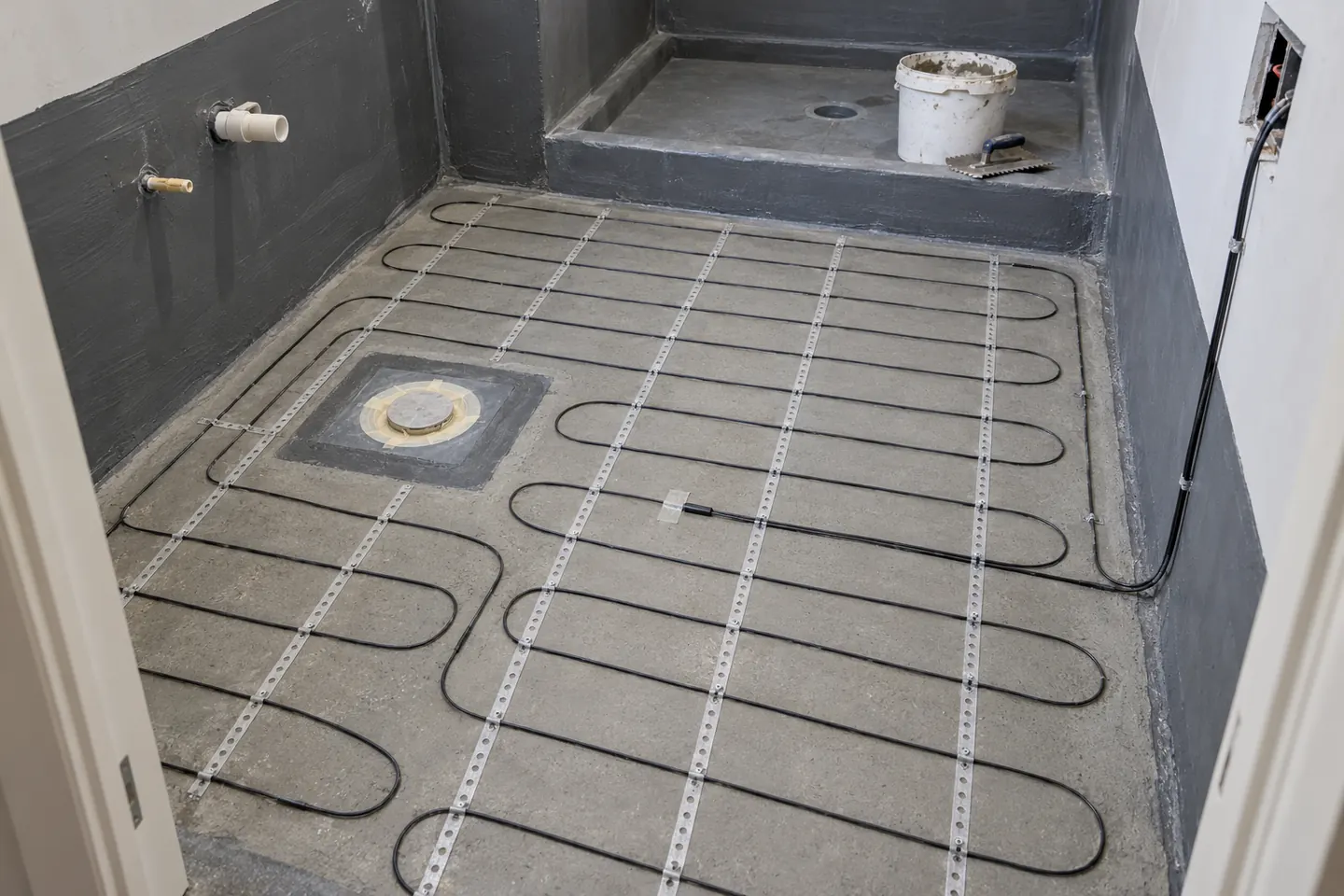
- Underfloor heating removes the cold-shock that makes people rush on a wet floor, and helps the floor dry between uses
- A ducted exhaust fan cuts the condensation that leaves a slick film on tiles
- Good, even lighting without a shadow cast by the person standing at the basin
- A heated towel rail so towels are dry rather than cold and damp
- Insulation above the ceiling, because a warm room is one people do not hurry out of
Working with an older house
Most of this work happens in weatherboard, fibro and brick homes built long before anyone thought about accessibility. That shapes the approach.
A timber floor over a subfloor is an advantage: a set-down for a level-entry shower is achievable, and plumbing can be moved to suit a better layout. A slab is more constrained but not an obstacle; the shower area can be ground down or the surrounding floor built up.
Where the bathroom is up a step from a hallway, or reached through a laundry, the path to the room matters as much as the room. That gets looked at during the measure.
Pre-1990 homes are tested for asbestos before demolition and any removal goes to a licensed asbestos removalist.
What we will not do
We will not describe a renovation as meeting a formal accessibility standard unless it has actually been designed and documented to that standard. We will not promise that any particular work attracts funding; that is between you and the funding body. And we will not sell a grab rail screwed into unreinforced plasterboard, because it is worse than no rail at all.
Approvals
Internal bathroom work that keeps the room where it is is generally exempt development, but check with Blue Mountains City Council if walls are moving or the footprint changes. A strata property needs owners corporation approval for wet-area work.
Cost and next steps
Step-free showers, blocking, wider doorways and heating all sit inside a normal renovation budget rather than beside it. The cost page sets out the planning tiers, and the renovation process explains the program. A free on-site measure produces a fixed written quote.
The deposit on residential building work in NSW is capped at 10 per cent of the contract price. Renovation work is carried out in partnership with Coastal Renovation Group, a licensed NSW builder; licence and insurance details are provided on request.
Call 02 4705 3295 or send the room details through.