The gateway town
Glenbrook sits at the bottom of the climb, with Lapstone below it and Blaxland above. It is the mildest place we work and the easiest to reach, and its housing is the most varied on the line: Federation and inter-war cottages near the village, a layer of mid-century homes, brick family houses from the seventies and eighties, newer infill, and some substantial houses on bush-edge blocks towards the national park.
That variety means there is no single Glenbrook bathroom. The measure does more work here than anywhere else on the mountain.
What the mix means in practice
Older cottages sit on timber floors over a subfloor, which makes replanning a cramped bathroom genuinely affordable. They also come with the usual old-house unknowns: soft timber near an old waste, framing that needs stiffening before tiling, and pre-1990 sheeting that has to be tested.
Mid-century and 1970s to 80s homes are mostly on slabs, with the bathroom and separate toilet in the standard arrangement of the period. Keeping the wet points and changing everything else is usually the best value; removing the dividing wall to make one room is usually the best improvement.
Newer houses are generally sound and often just dated. A partial upgrade — vanity, tapware, screen, mirror, lighting, fan, heated rail — can get most of the result for a fraction of a strip-out, and we will say so when that is true.
Milder, but still the mountains
Glenbrook does not get the frost that Katoomba does, and it would be dishonest to sell it the same specification. What still applies:
- A ducted exhaust fan sized to the room, running on a timer. This is the universal one.
- Ceiling insulation while the ceiling is open — cheap, and it stops the cold-corner mould that even mild winters produce.
- A heated towel rail, which most households here want and few regret.
- Underfloor heating as a genuine option rather than a default. Worth it if the bathroom is used early or the floor is over a subfloor.
Laundries
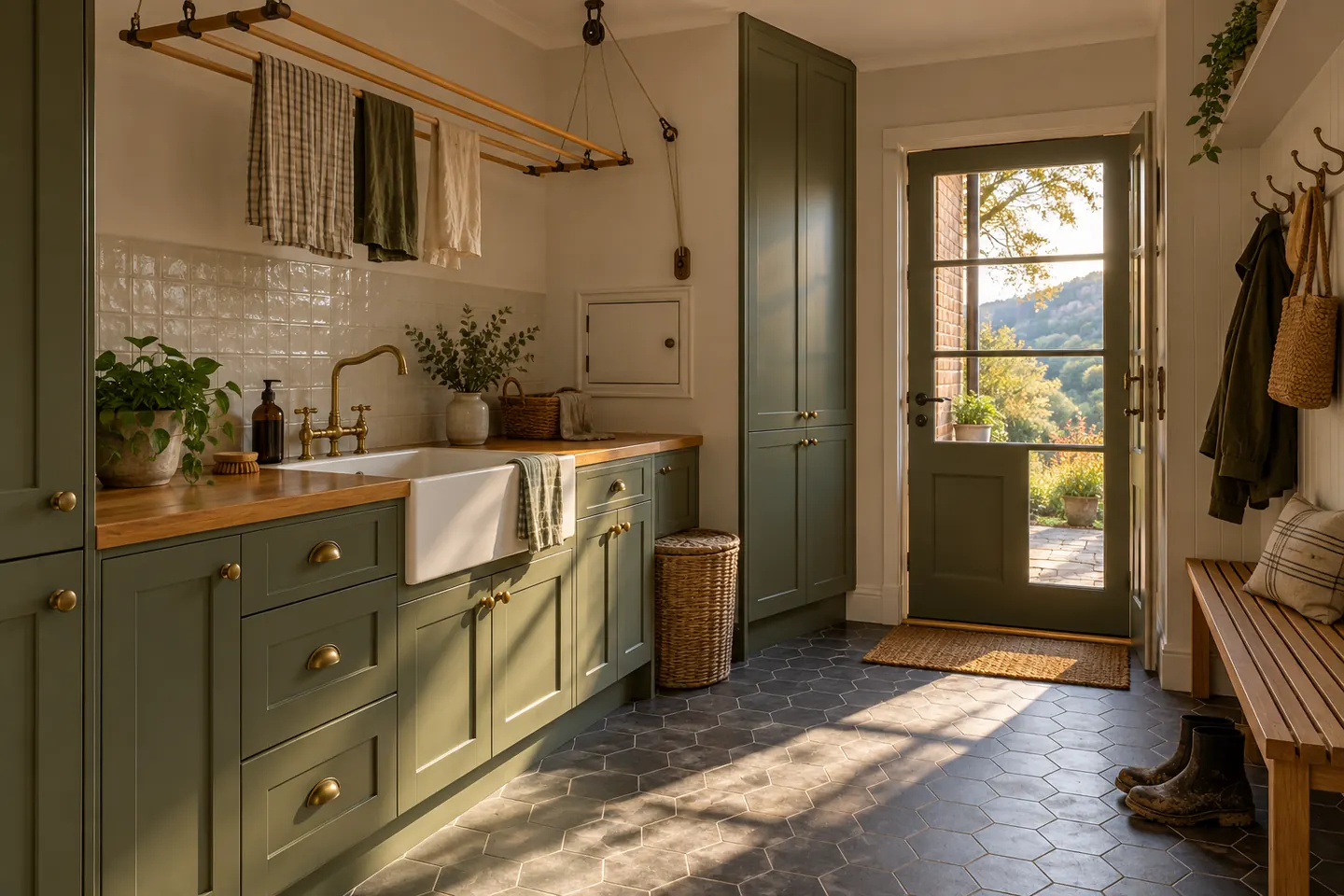
Glenbrook has a lot of older homes where the laundry is in a lean-to, under the house or on an enclosed verandah. Those rooms take a beating: bush dirt, wet boots, and clothes that will not dry outside through a damp winter. Doing the laundry alongside the bathroom is the cheapest way to get one, and it is often the room that changes daily life more. See the laundry page.
Bush-edge blocks
Towards the national park the blocks get larger, steeper and harder to service. Access is worked out at the measure: where a skip can legally sit, whether a delivery truck can turn, and how far materials are carried. Some of those lots are mapped as bush fire prone, which does not usually affect internal work but can affect external windows and doors — confirm the property's status with Blue Mountains City Council rather than relying on a general statement.
Asbestos
Homes built or renovated before 1990 can contain asbestos in wet-area sheeting, eaves and old floor coverings. Bathrooms are tested before demolition and removal is carried out by a licensed asbestos removalist.
Materials
Engineered stone has been banned in Australia since 1 July 2024 and is not offered. Porcelain, natural stone, sealed solid timber and quality laminate all make good bathroom and laundry benchtops — the vanity guide explains what actually survives in a wet room.
Cost and next steps
See the cost page for the planning tiers, or how a renovation runs for the program. A free on-site measure produces a fixed, written, itemised quote for your room.
Renovation work is carried out in partnership with Coastal Renovation Group, a licensed NSW builder; licence and insurance details are provided on request.
Call 02 4705 3295 or send the room details through.